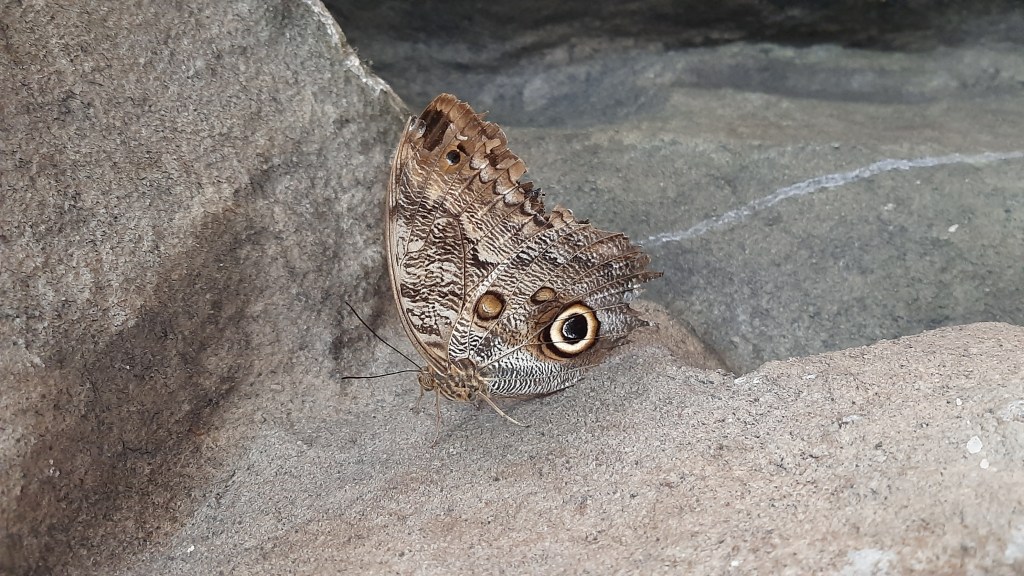
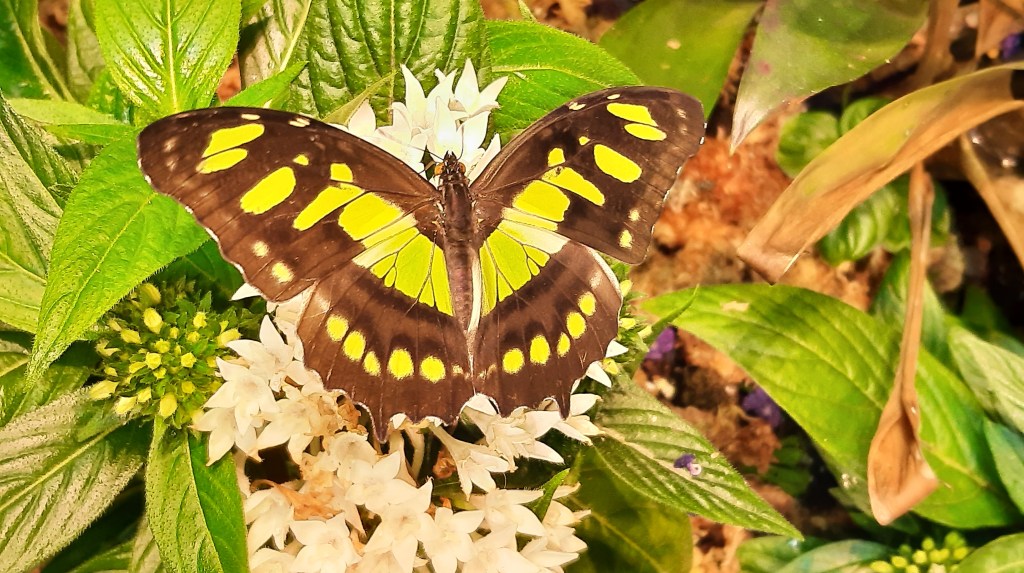
Earlier this month, we spent an afternoon exploring the halls of the NC Museums of Natural Sciences and of History, across the street from each other in downtown Raleigh. Admission is free to both museums though donations are gladly accepted. The Natural Sciences museum has an impressive number of “live” exhibits, including a newly reopened butterfly exhibit, arthropod (insect) zoo, and aquatic fish and invertebrates of North Carolina. The Living Conservatory where the butterflies roam freely also encloses a sleepy two-toed sloth, a venomous snake, tarantulas, and turtles.
On entering the history museum (pass by the NASCAR exhibit on your left and then straight ahead), “The Story of North Carolina” exhibit traces life from its earliest inhabitants through the present. These include many European populations including the Scots who settled here in the 18th century and fought on both sides of the American Revolution.

If this sounds straight out of an Outlander novel… you can read about it starting with Diana Gabaldon’s fourth installment, Drums of Autumn (or watch on Starz and admire Jamie’s (Sam Heughan’s) toned physique). Jamie the 18th century Highlander and Claire the time travelling physician conclude a long journey across the ocean and wash up on the Eastern shore of the future United States, eventually settling in the wilds of North Carolina on Fraser’s Ridge. They are soon joined by their daughter and future son-in-law Brianna and Roger, in a bittersweet reunion.
As Claire and Jamie bless the hearth of their new cabin in North Carolina (burying a piece of iron under the hearthstone), they are “surrounded by wilderness and mocked by mockingbirds.” (D. Gabaldon, Drums of Autumn). The Northern Mockingbird is a bold medium sized bird found all over rural and urban areas, best known for its ability to mimic other birds’ song and the sounds of amphibians and insects. They are very territorial and will often chase other birds away from the feeders where they dine on mealworms and suet, extending their wings to flaunt their bright white wing patches in an attempt to appear more menacing.

Back in the “present” time of 1969, Roger and Brianna share a dram or two of “Glen Morangie” (his neat, hers in some tea). Glenmorangie Lasanta (Gaelic translation: warmth and passion) a 12 year single malt Highland Scotch, is aged 10 years in Bourbon oak barrels and finished two years in sherry casks. It is very smooth and more reminiscent of Bourbon than the peaty Islay Scotches. It is usually drank neat, on ice or with a few drops of water. This week I used it in a Gold Rush, a variation on the whiskey sour containing honey syrup in place of sugar syrup.
Gather your ingredients: Scotch or whiskey of choice (Glenmorangie Lasanta 12 used here – the box alone is so pretty it is almost worth half the price alone! :), honey syrup, lemons. Accessories: lemon squeezer, kitchen scale, cocktail shaker, rocks glass filled with ice, garnish: orange or lemon slice.

Glenmorangie Gold Rush
2oz Glenmorangie Scotch whiskey (or substitute whiskey of choice)
3/4oz fresh squeezed lemon juice
1/2oz honey syrup
Place ingredients in a cocktail shaker half filled with ice. Shake 10-15 seconds. Pour over rocks glass with ice. Garnish with orange or lemon slice.

Enjoy this little taste of my Scottish heritage and please, drink responsibly! 🙂

 Birds, Books and Bourbon