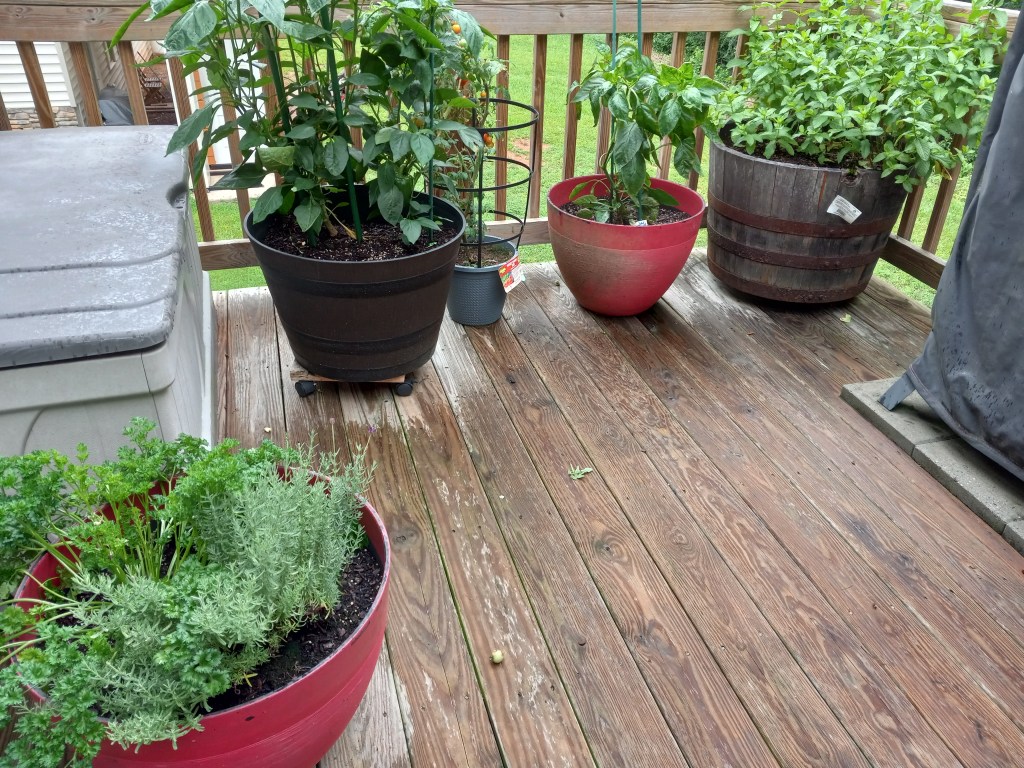
After an unusually cool spring, summer has finally arrived in North Carolina. With the world’s hottest days breaking records this week, the NC heat and humidity has been insufferable for this native Canadian. Our deck garden has responded to all the rain with a flourish of greenery, though the fruit has been slow to mature. For reasons unknown, we have seen many fewer pollinators this year, from hummingbirds to bees and even the annoying wasps that usually abound by June. Pollination is essential for fertilization and reproduction of most plants, by transferring pollen from the male anther to the female stigma parts of flowers. Pollinators include many flying insects such as bees and wasps, butterflies, birds such as hummingbirds, and small mammals like bats.
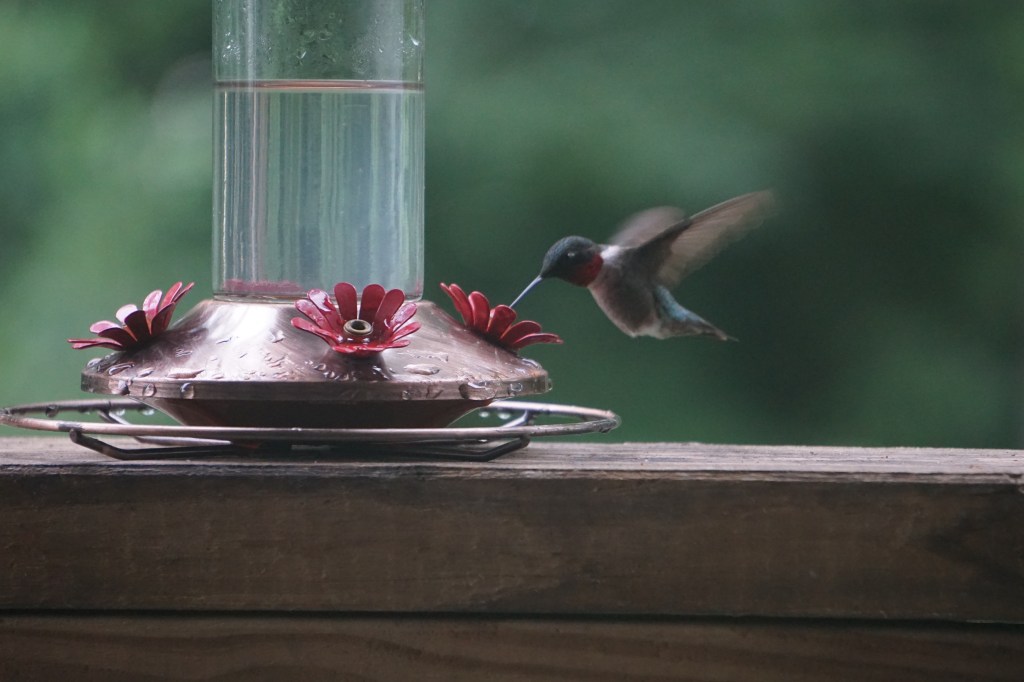
The most common hummingbird in the East, the ruby-throated hummingbird, is so named for the male’s striking neck plumage which looks black or red depending on angle and lighting. These tiny but mighty birds are capable of flying over 500 miles in a single flight during their migration across the Gulf of Mexico. They prepare for their journey by feeding on nectar from flowers and from hummingbird feeders such as mine above – filled with a 1:4 sugar to water mixture – as well as some insects. They can be quite territorial so it is recommended to have multiple feeders when food resources are scarce to avoid fighting. They beat their wings over 50 times a second and can fly vertically or horizontally, stop suddenly and hang motionless in midair.
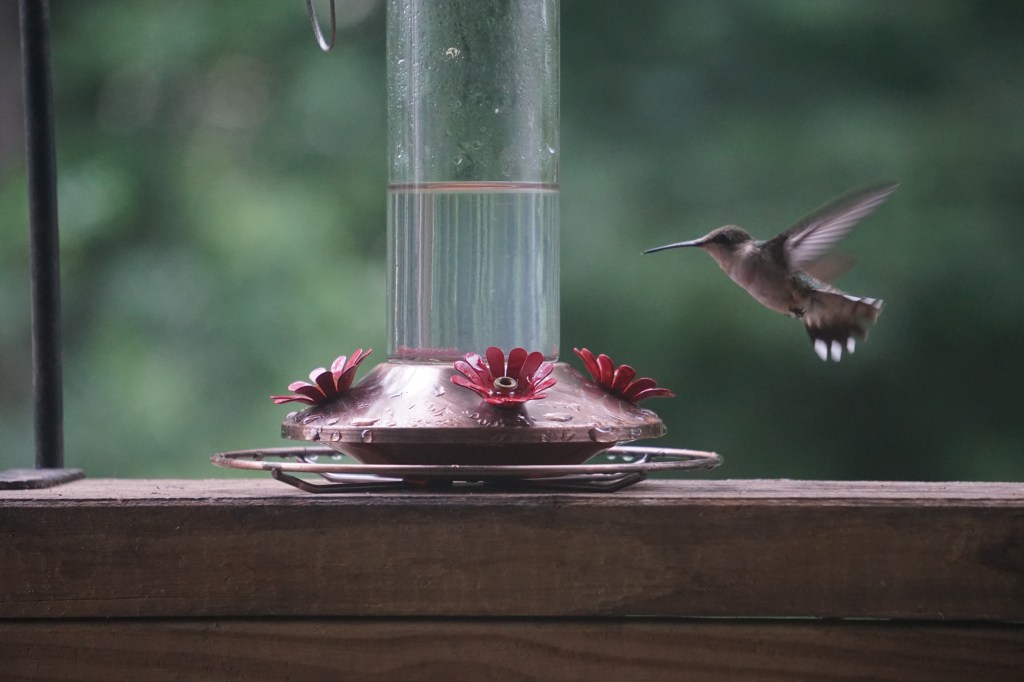
While hummingbirds pollinate by transferring pollen from their wing feathers from plant to plant, wild fig plants have evolved a more unique mechanism of survival. Despite its appearance as a fruit, a fig is actually an inflorescence, with hundreds of little flowers contained in each shell. The fig tree produces male caprifigs which produce pollen, and female figs which are hidden away from outside pollinators. The fig wasp has adapted to enter the figs through a tiny hole (an ostiole), and either pollinates the female figs or lays her eggs in the caprifigs before dying. The caprifig provides a safe place for the male wasps to first hatch and fertilize their sisters (ew) before carving out an exit for them through the fig before they too perish. The pregnant queens are born and exit through these passages made by the males, carrying pollen on their bodies to complete the cycle anew in a different fig tree. The entire process and their lifespan is only 48 hours.

You may ask, so are we eating wasps with our figs? Not really. Most commercially grown figs are fertilized without the use of wasps, and even were you to bite into a wild fig, the enzymes produced by the ripening fruit digest and break down the exoskeletons of any residual wasps and convert them to protein for the fruit’s nourishment. Any crunch you detect is just the seeds. However, if the possibility of being an insectivore is not to your choosing, skip the wild figs.
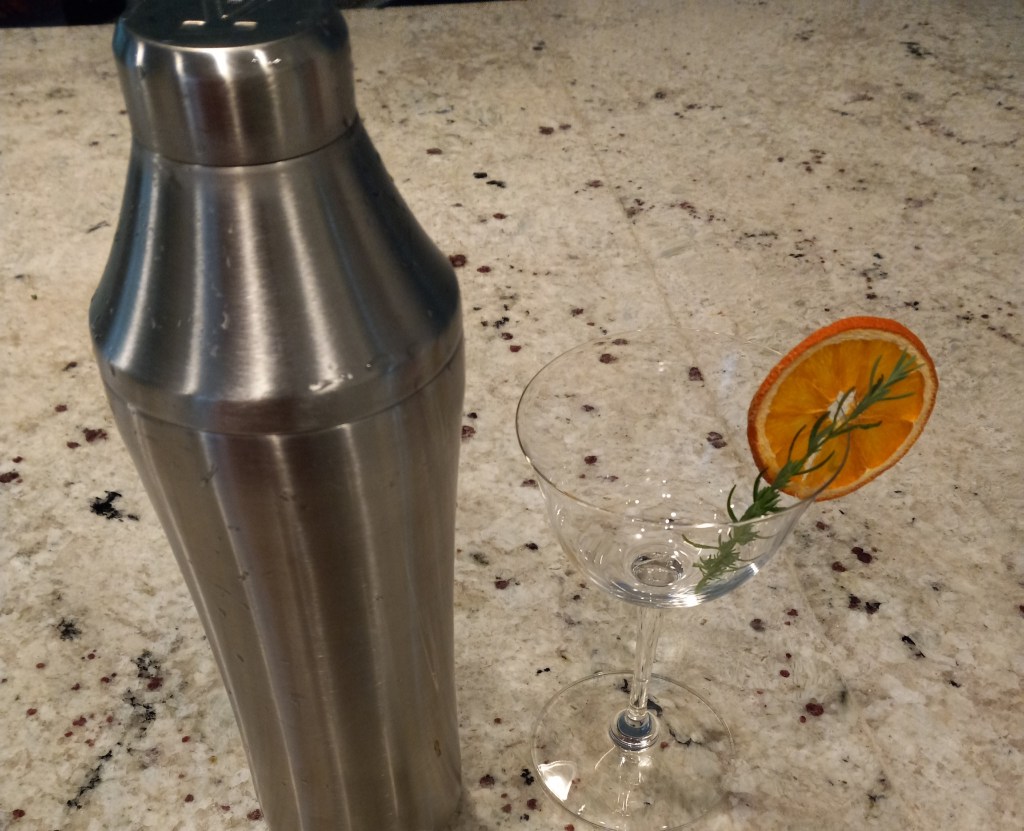
One of my favorite beverages is a variation on a whiskey sour first described by Oak and Eden though I have altered the recipe a bit here. I used Wild Turkey 101 Bourbon and Hello Fresh fig jam packets that are the perfect size for a cocktail. The extra steps of stirring the ingredients prior to adding ice and shaking and then double straining are important to avoid getting large chunks of jam sticking either to your shaker or ending up in your drink. This shaker from Elevated Craft is well worth the investment – it insulates and prevents your hands from freezing to the metal and comes with a built-in measuring cup in the top.
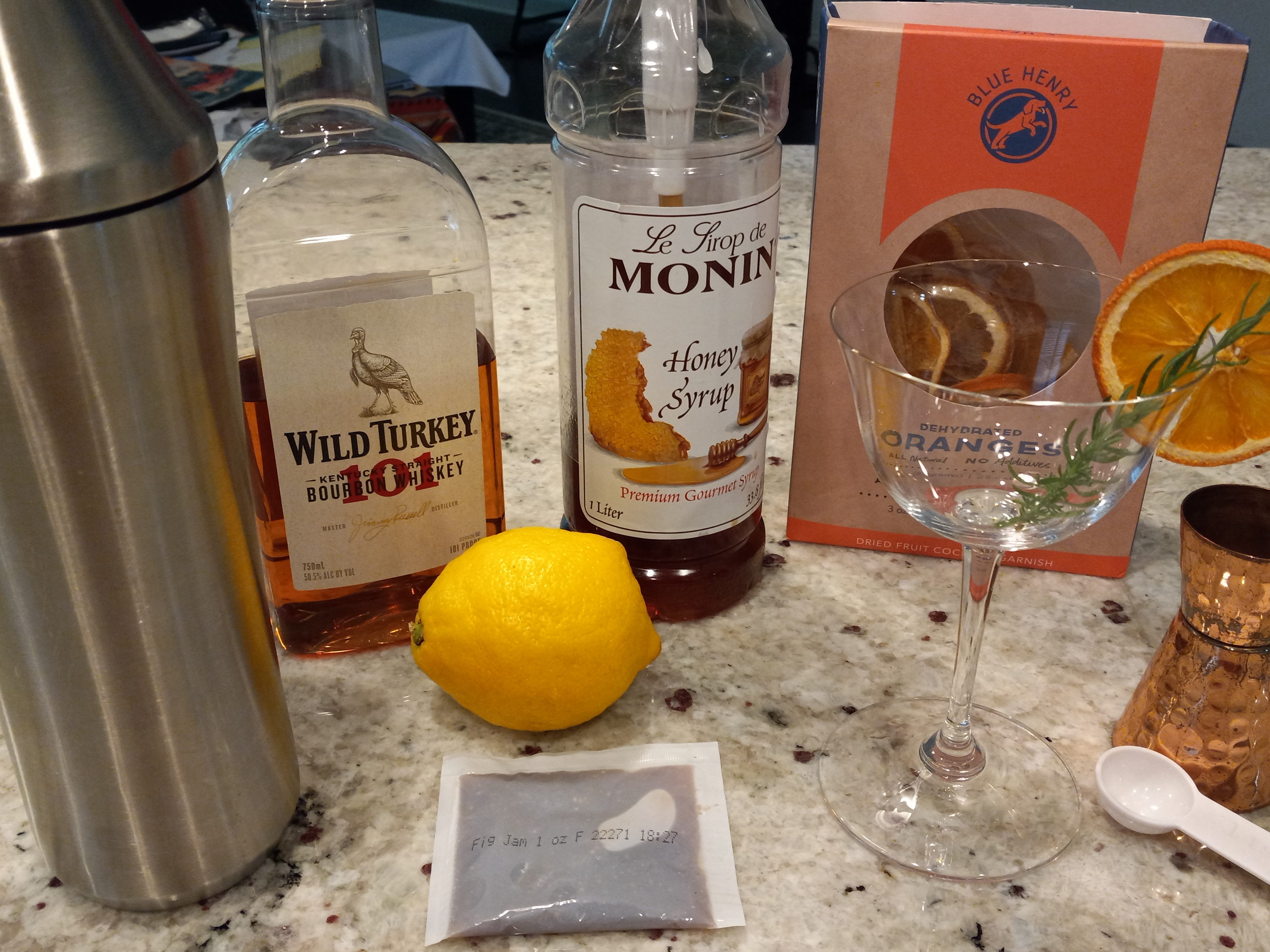
Gather your ingredients: Bourbon (Wild Turkey 101), honey syrup, 1 large lemon, fig jam. Accessories: cocktail shaker, lemon squeezer, jigger, teaspoon, strainer. For serving: a rocks glass filled with ice OR a sour glass. Orange slice and rosemary for garnish.
Figs of Wrath
2 oz bourbon
1 oz fresh squeezed lemon juice
1 oz fig jam
1 tsp honey syrup
Rosemary or thyme and orange slice, for garnish
Place bourbon, lemon juice, and fig jam into a cocktail shaker. Stir to partially dissolve the fig jam. Fill shaker half full with ice. Shake for 15-20 seconds. Double strain and pour over ice into a rocks glass or into a sour glass. Garnish with rosemary and orange slice.

This week’s literary selection is a WWI period mystery by Kelly Oliver starring an amateur spy named Fiona Figg. See what I did there? Enjoy, and remember to drink responsibly 🙂

 Birds, Books and Bourbon