We have been watching the Yellowstone origin story, 1883 this month on Paramount. The nostalgia of playing Oregon Trail in eighth grade (your wagon breaks an axle and you freeze in winter, you forget your limes and die of scurvy, or you neglect to boil your water and succumb to dysentery) is strong with this one. Tim McGraw and Faith Hill play the pioneering Duttons and though I have always thought they were a bit vanilla in real life, the rawness and violence of this series has brought unto me a new respect. This week, Rita Wilson cameos as a shop keeper and she and Faith wash away the stresses of the nineteenth century with a large bottle of whiskey punch. More on that in a bit.

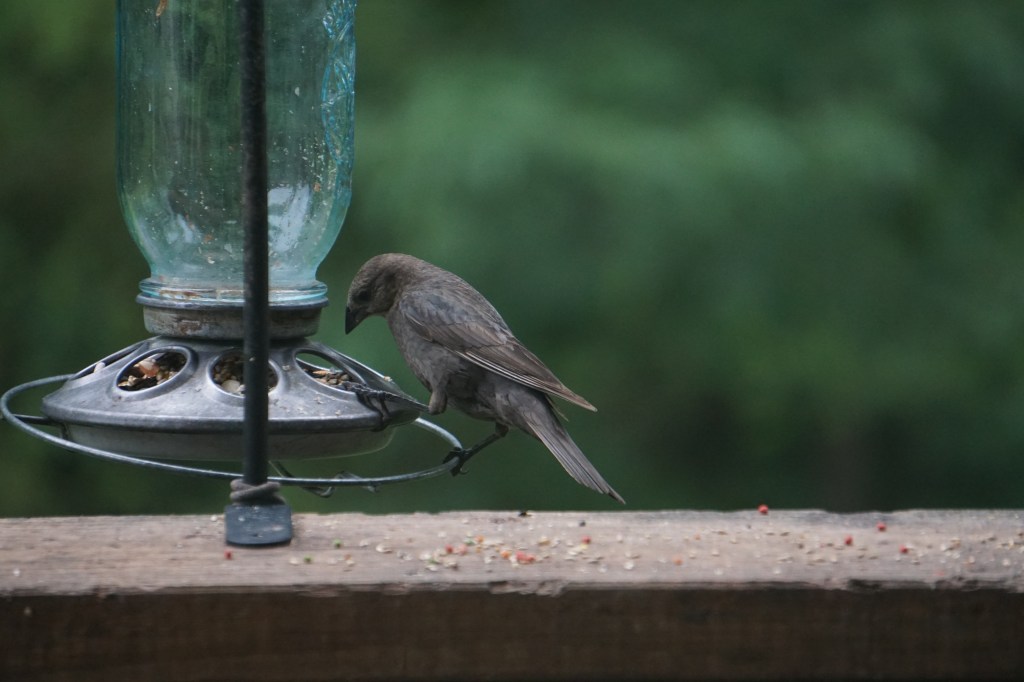
The brown-headed cowbird, though now a frequent east coast resident, was originally a follower of livestock such as bison in the Great Plains and moved east along with forest clearing in its preferred grassland habitat. Their diet consists of about 75% small seeds like millet and some insects stirred up by their cloven friends. Cowbirds are brood parasites, meaning they do not build their own nests but instead lay their eggs in the nests of other birds, often to the detriment of the host species who’s offspring are usually smaller and deprived of resources, or who’s eggs are pushed out of the nests. What “bird brains” must they have to not know the difference between their own young and the cowbirds?? This Carolina wren doesn’t seem too confused by its monster baby here:

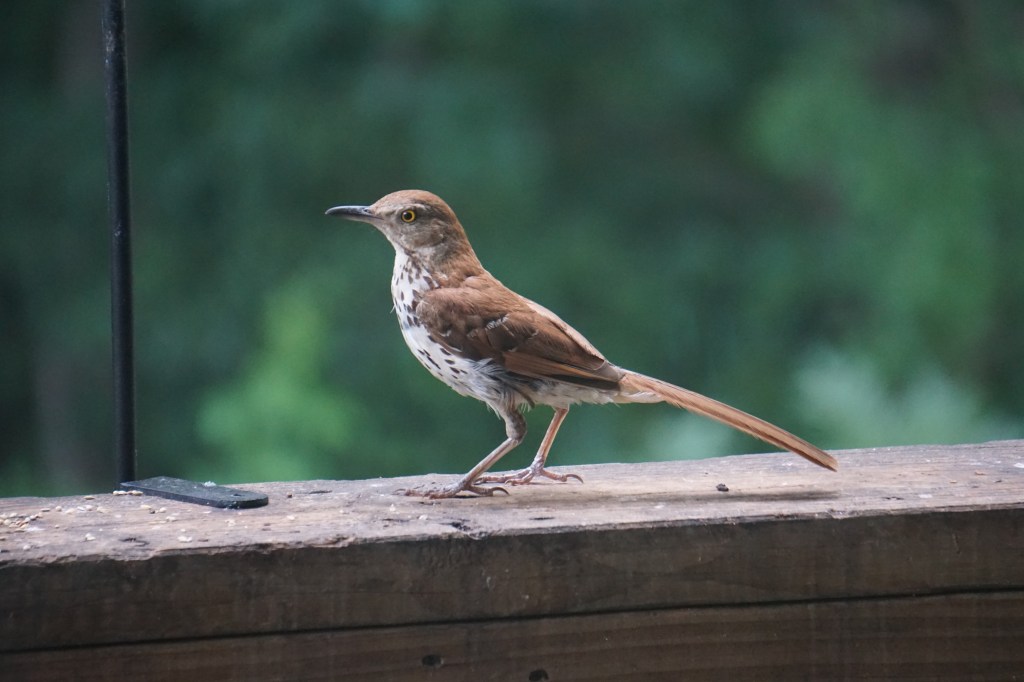
Some birds do in fact realize the difference and routinely reject the imposter eggs, such as one of my favorite smart birds, the Brown Thrasher, who we will elaborate on in a later blog.
The male cowbirds have the aptly named brown head and the females are a uniform dull brown. They have a variety of calls but the most noted to me is a liquid burbling sound like a babbling brook (say that five times fast).
A typical alcoholic “punch” usually includes an alcohol, sugar, juice (often citrus), water, and spices. For my whiskey punch, I assume that saloons of the West would have had some kind of home fermented fruit liqueur (I first tried this with sloe gin, made from the fruit of the blackthorn plant, but this was not imported to the states until the twentieth century). You could also use grenadine syrup. For the bourbon, I used Bulleit Bourbon (it clearly says, Frontier Whiskey! 🙂 Shea the wagon boss orders a soda water in the first episode of 1883 so that is accurate – I used Fever Tree which makes a line of fancy fizzy sodas. You could also substitute a flavored soda like Sprite but I would then leave out the extra sugar syrup. Rita first offers Faith a lemonade so we know citrus was available as well.

Gather your ingredients: Bourbon, grenadine syrup, simple syrup, lemon, lime, soda water. Orange slice and mint or other herb for garnish. Lemon squeezer, cocktail spoon/ stirrer, jigger, and a Collins or tall glass filled with ice.
1883 Whiskey Punch
2 oz bourbon whiskey
1 oz grenadine syrup or red liqueur such as sloe gin
1/2 oz lemon juice (1/2 a lemon)
1/2 oz lime juice (1 lime)
1/4 oz (1/2 Tbsp) sugar syrup
3 oz soda water
Orange slice (or any citrus) and mint or other herb, for garnish
Add bourbon, grenadine, lemon juice, lime juice, sugar syrup, and soda water to glass with ice. Stir to combine. Top with citrus slice and mint sprig.

My husband gifted me one of his favorite Louis L’Amour westerns, The Daybreakers, to accompany our trip out west. Enjoy, and please drink responsibly. 🙂

 Birds, Books and Bourbon