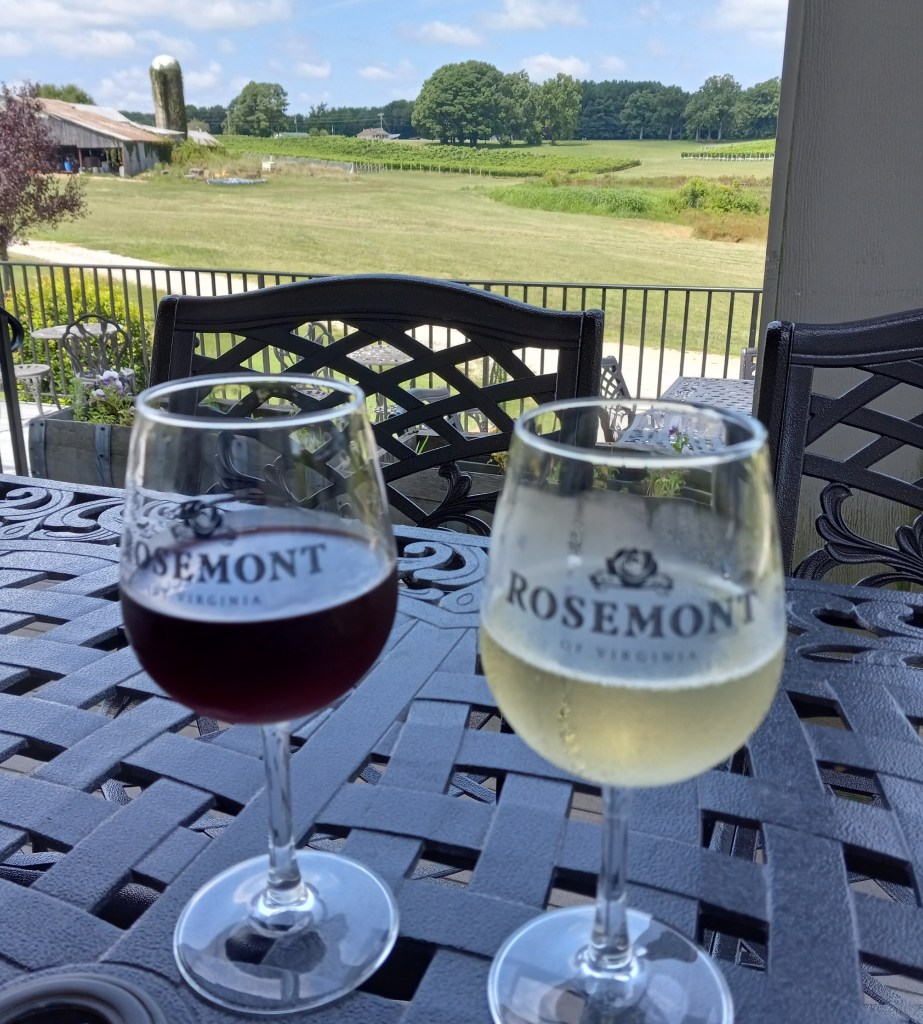
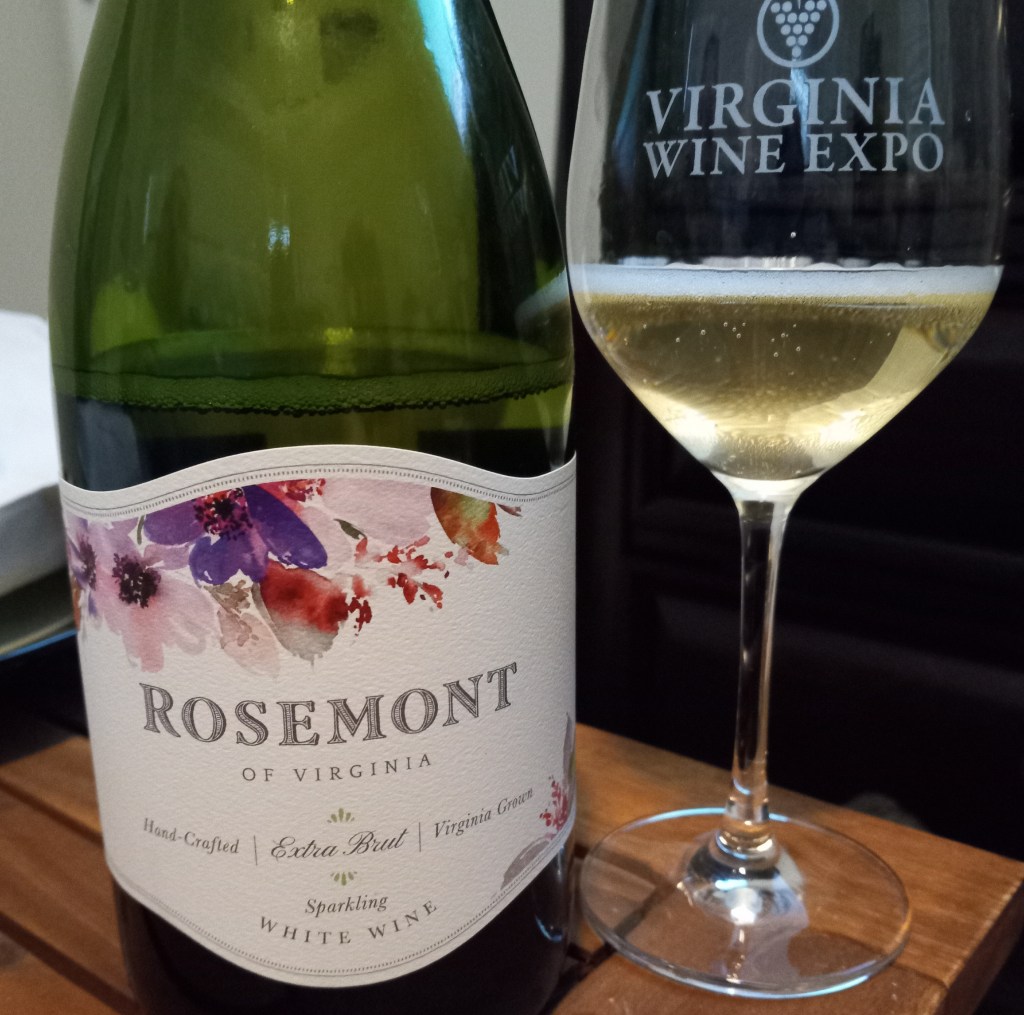
Another very warm weekend comes to a close and a very busy one with more outside activities than I usually tolerate in August. I competed my first 3D archery tournament with a rough start but an acceptable finish, scoring seven 10s in the max 30 yard class mainly in the second half. I also harvested quite a few green peppers from our garden (why did we plant six pepper plants? I am going to have to start a farm stand to sell them all). Saturday, we spent the day at our current favorite Virginia winery, Rosemont Vineyards and Winery in La Crosse, VA. We began the morning harvesting grapes from our adopted Chardonel vines. Chardonel is a hybrid grape developed at Cornell University in 1953 that tends to flourish in the Virginia climate.
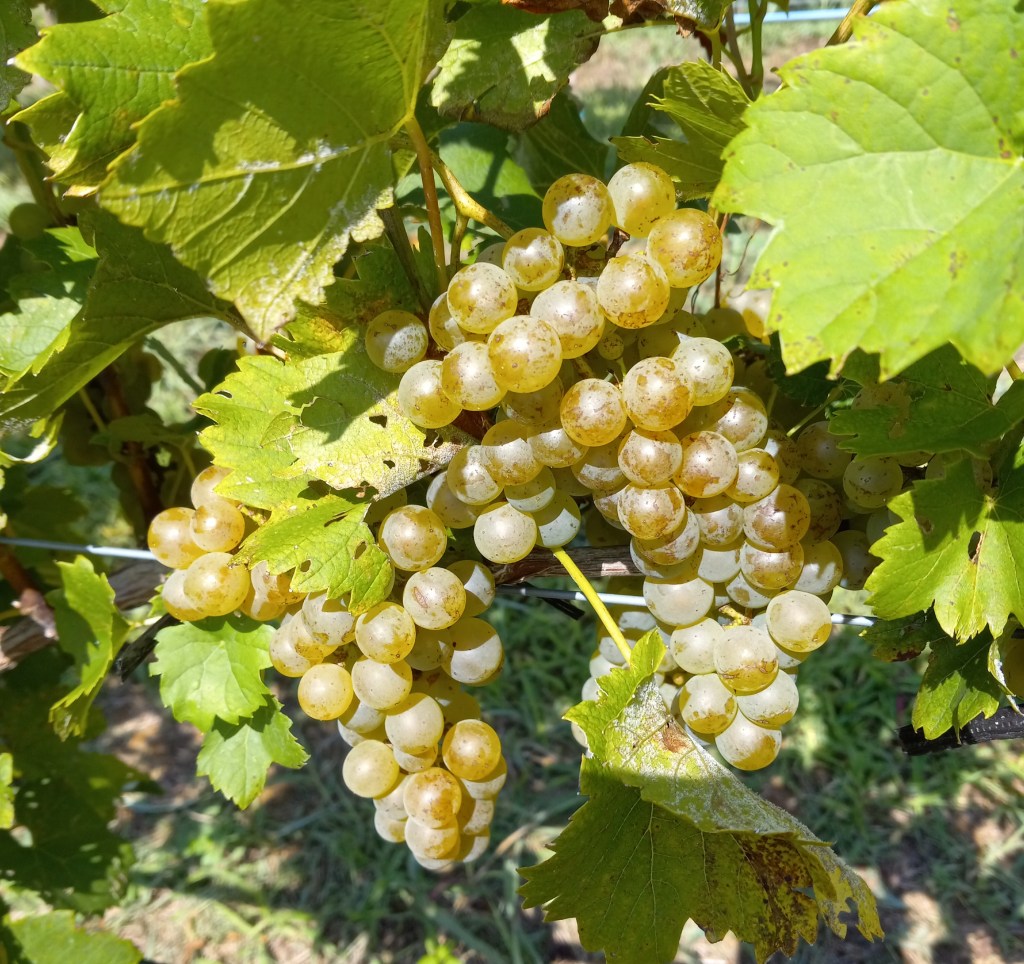
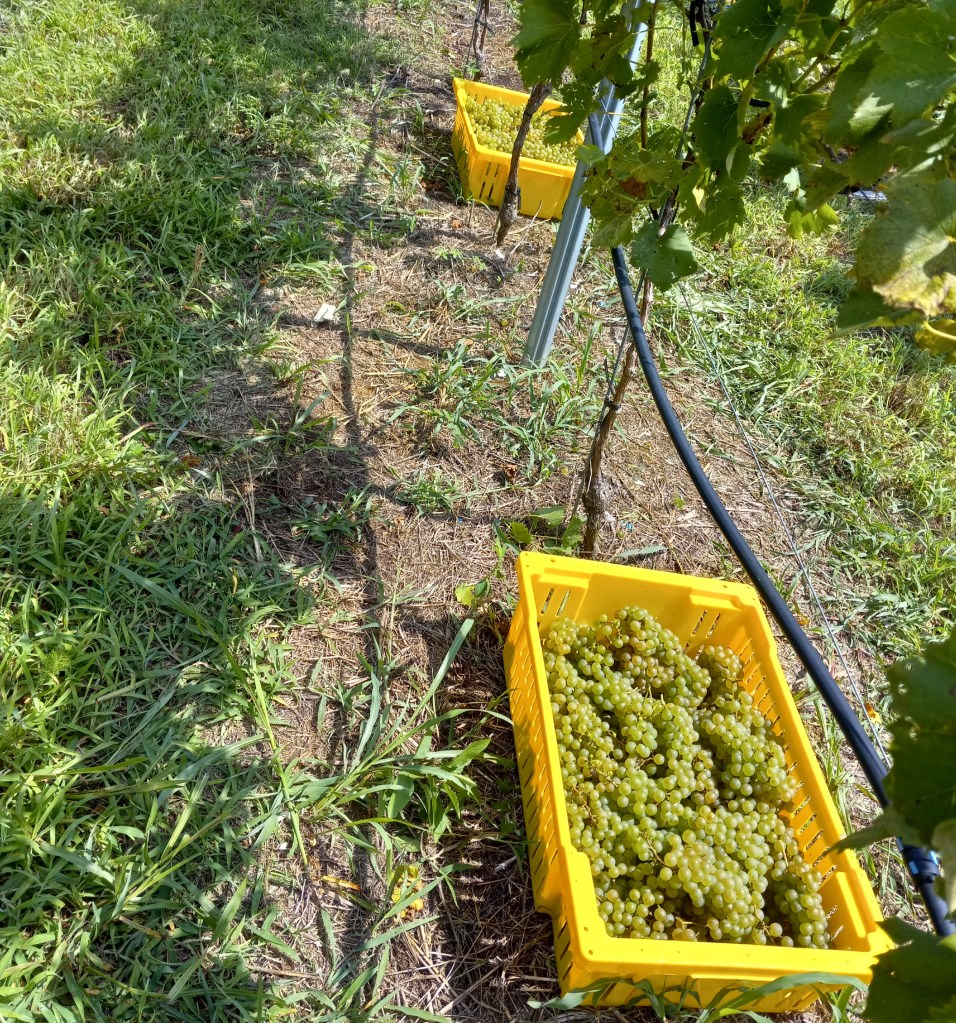
These are the fruits of our labors. This harvest is slated to be used in their next Extra Brut Sparkling, a refreshing fruity dry bubbly.
Before I started tinkering with cocktails, we had accumulated quite the collection of wine bottles from the Commonwealth (1000+ bottles at this point). I attended my first wine festival in 2010 with my then boyfriend/ now husband, and since have developed a deep appreciation of the state’s viticulture. Virginia has come a long way from the cloying too-sweet productions of the early twenty-first century, and now holds its own among French, Italian, and west coast wines at multiple national and international competitions. Some of our favorite vineyards include Rosemont, Williamsburg Winery, Barboursville Vineyards, and the sadly now closed post COVID, Tarara Winery in Loudoun County.
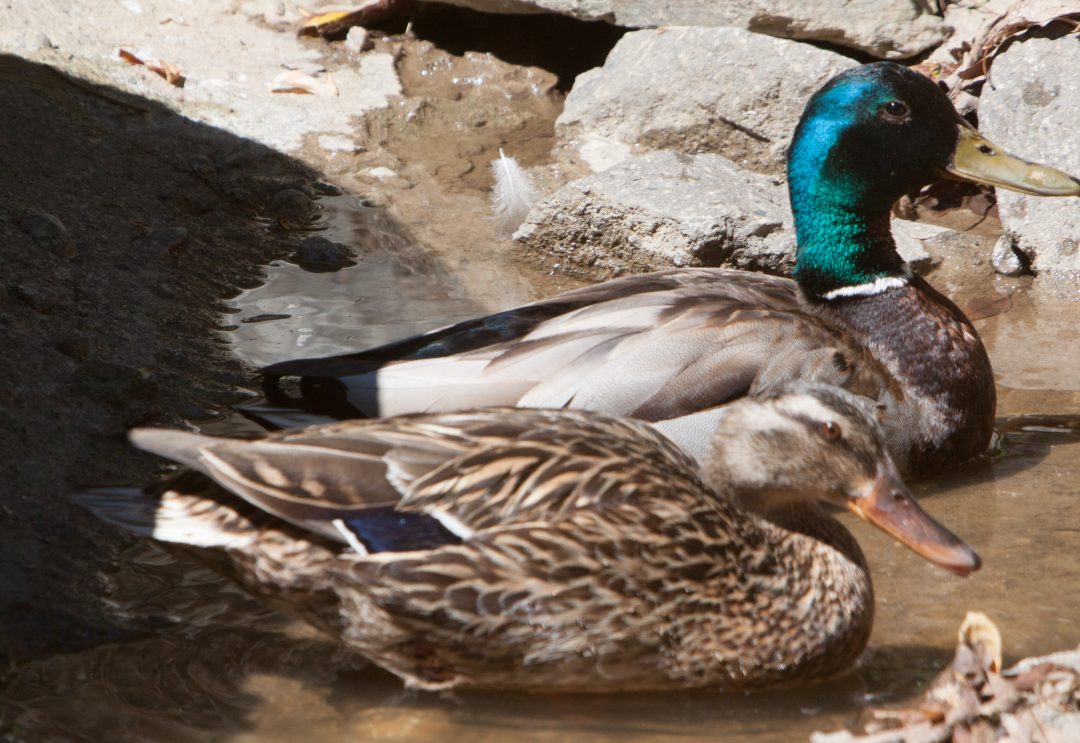
Many birds are huge fans of wine grapes and are the bane of many a vintner. We see mockingbirds all the time at Rosemont trying to sneak some snacks. Another pest often seen is the European starling, an invasive species first released in North America in the 1890s. Scientists have remarkedly discovered that they have quite a sophisticated palate, with the ability to taste salt, citric acid, and tannins (bitter compounds that occur in many fruits, including acorns and grapes), and differentiate sucrose (which they cannot digest) from other sugars. No wonder they love wine grapes so much.
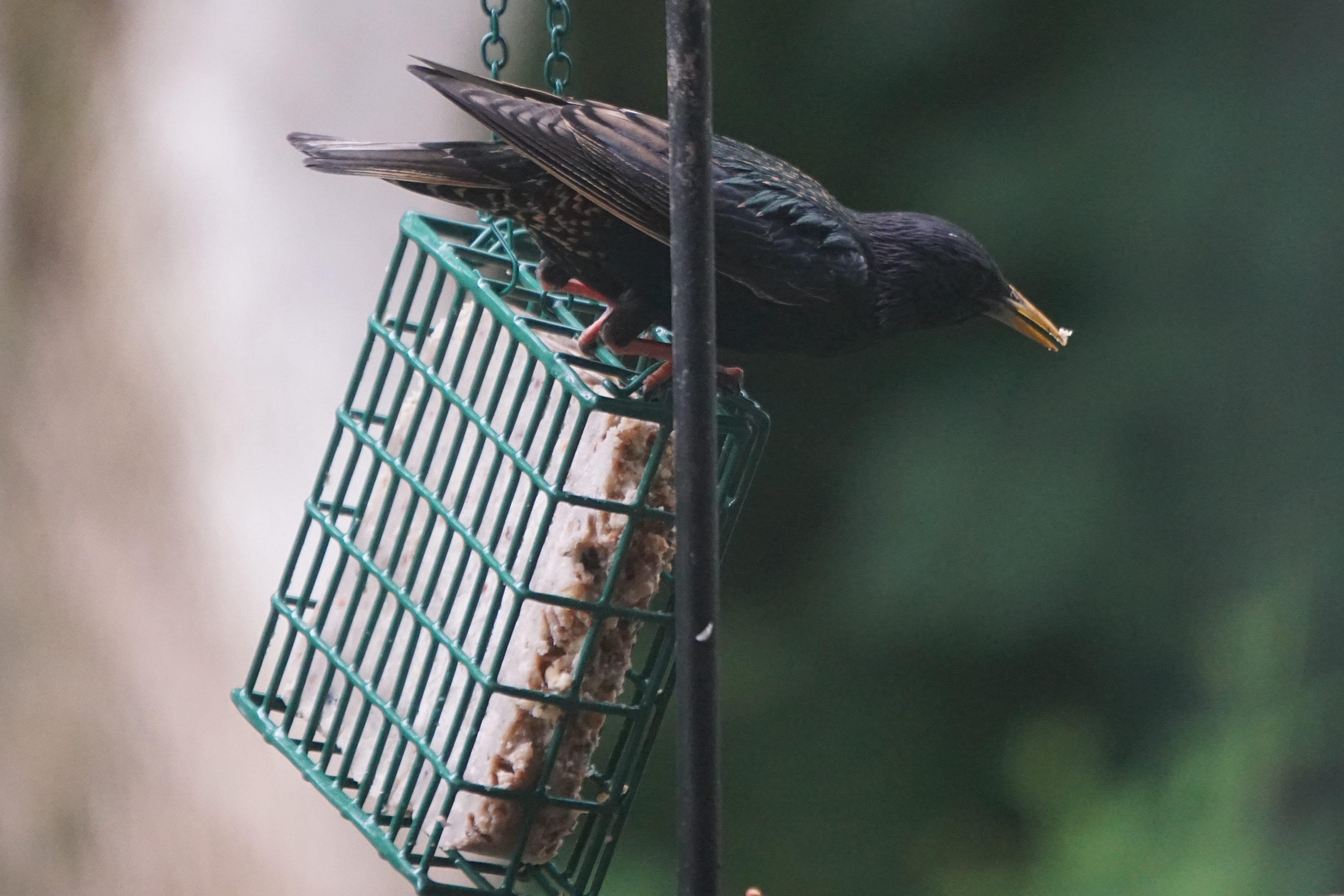
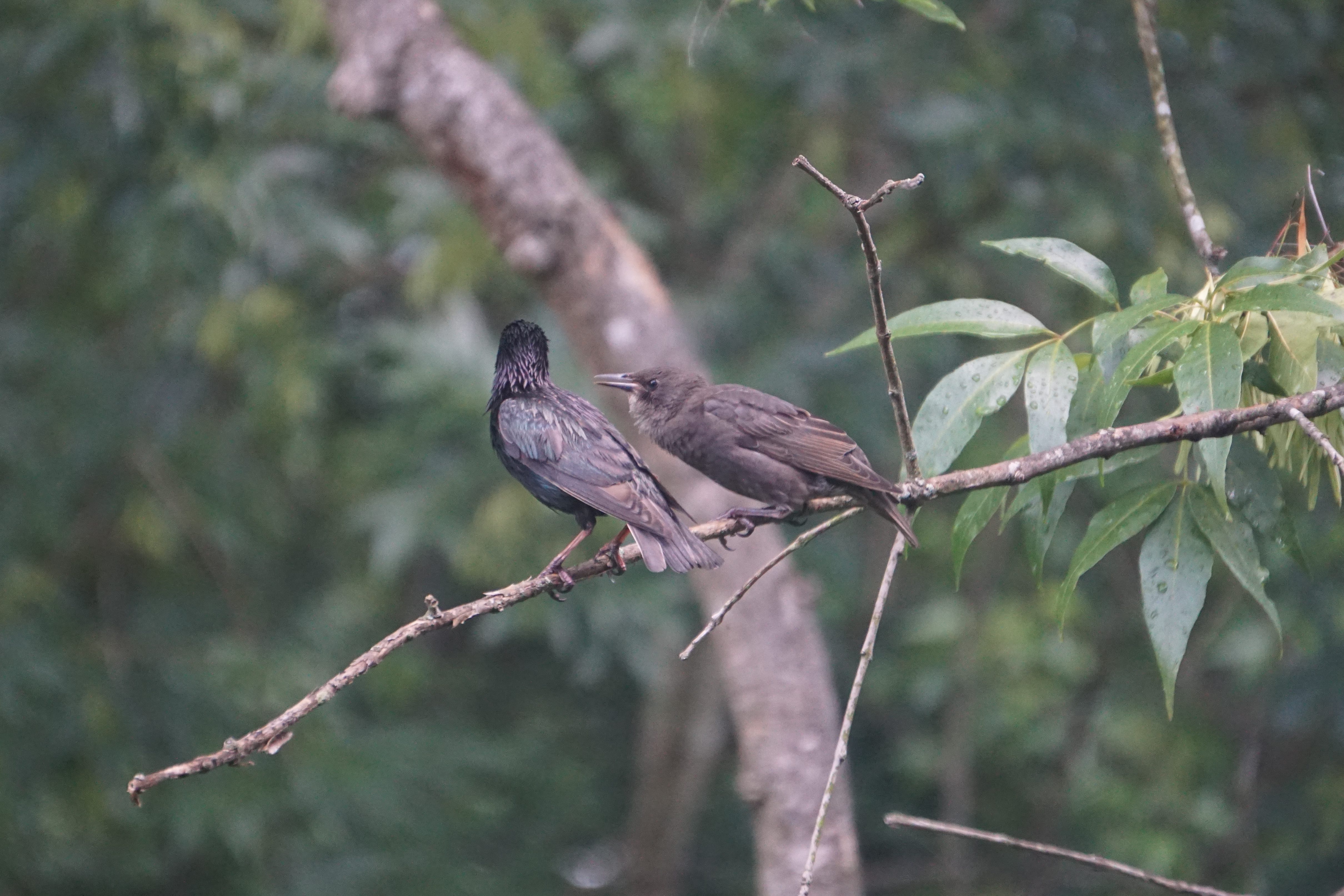
Breeding adults are identified by their purple-green iridescent plumage and bright yellow bills. The fluffy fledgling below will develop a brown plumage covered with white spots going into the winter. Starlings often travel in loud groups with other starlings and grackles. Besides grapes and other fruit, they consume invertebrates such as grasshoppers, beetles, flies, caterpillars, snails, worms, and spiders, as well as seeds and garbage.
Many cocktails can be made into a spritzer with the addition of a sparkling beverage, whether a sparkling wine or a soda. Today I made a sparkling bourbon sour using the Rosemont extra brut white wine. Continuing my keto kick, I used a zero sugar maple syrup, but I recommend a simple syrup or regular maple syrup for better taste. I used the Woodford Reserve bourbon and bitters but these can be easily substituted with any whiskey and aromatic bitters. You could use a champagne flute or Collins glass instead of the tall beer glass that I chose.
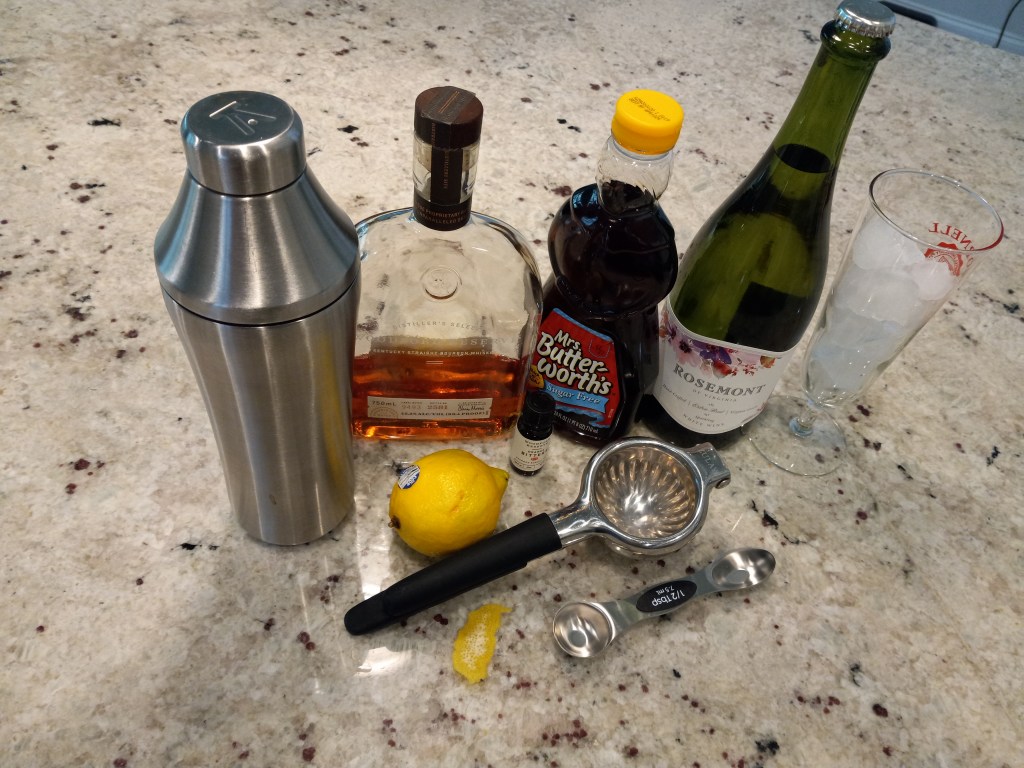
Gather your ingredients: bourbon, maple or simple syrup, sparkling wine, orange bitters, lemon. Tall glass with ice, cocktail shaker, citrus squeezer, measuring spoon, jigger or kitchen scale (not shown), lemon peel for garnish.
Rosemont Extra Brut Sparkling Bourbon Sour
2 oz bourbon
3/4 oz maple syrup or simple syrup
3/4 oz lemon juice, freshly squeezed from 1/2 a lemon
2 oz sparkling white wine or enough to fill glass
3 dashes of orange bitters
Lemon peel, for garnish
Place bourbon, syrup, lemon juice, and bitters into shaker half-filled with ice. Shake for 30 seconds. Strain into a tall glass 3/4 filled with ice. Top with sparkling wine. Garnish with a lemon peel.
Enjoy the rest of the sparkling wine with dinner, it is delicious on its own 🙂
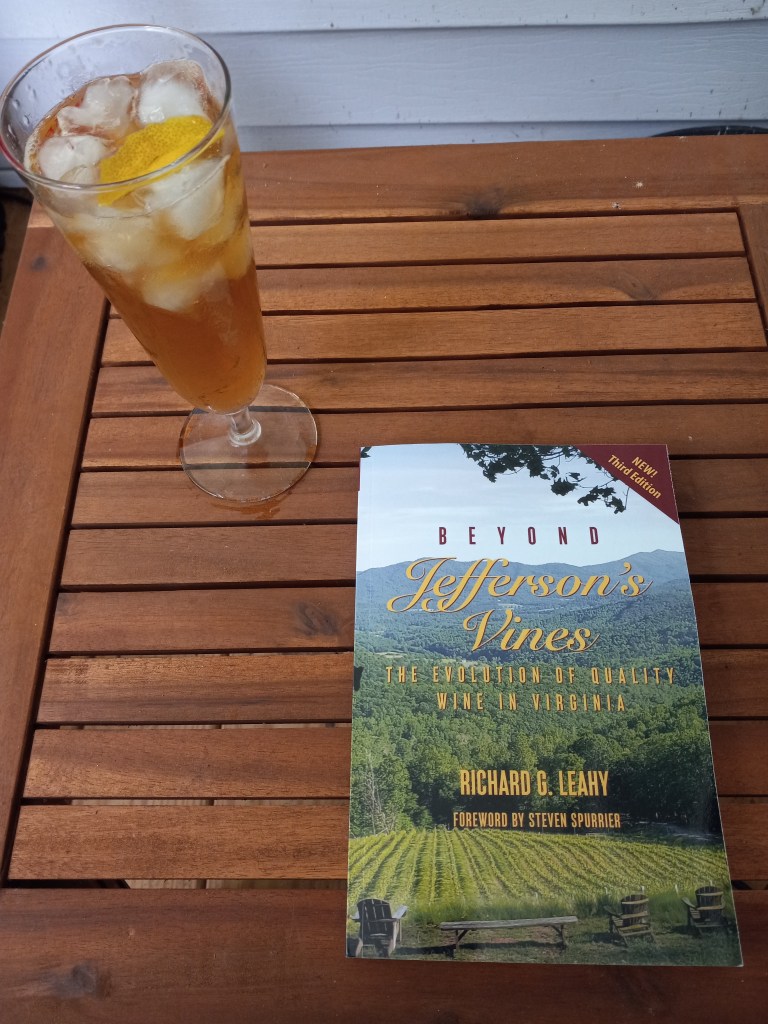
I just received the third edition of Beyond Jefferson’s Vines: The Evolution of Quality Wine in Virginia. Thomas Jefferson was one of the country’s earliest enologist with hopes of producing quality wines of his own in the 18th century; unfortunately the phylloxera vine louse doomed his efforts from the start. On the same terroir near Charlottesville, VA, today’s successful viticulture industry is booming. Since the first edition of this book in 2012 (and I read it pretty close to that time), more than 200 additional wineries have established themselves in the Commonwealth. It is a great introduction for readers/ wine enthusiasts unfamiliar with the wines of the region, and a trip down memory lane for someone like me who has visited many of the sites. Enjoy, and please, drink responsibly 🙂